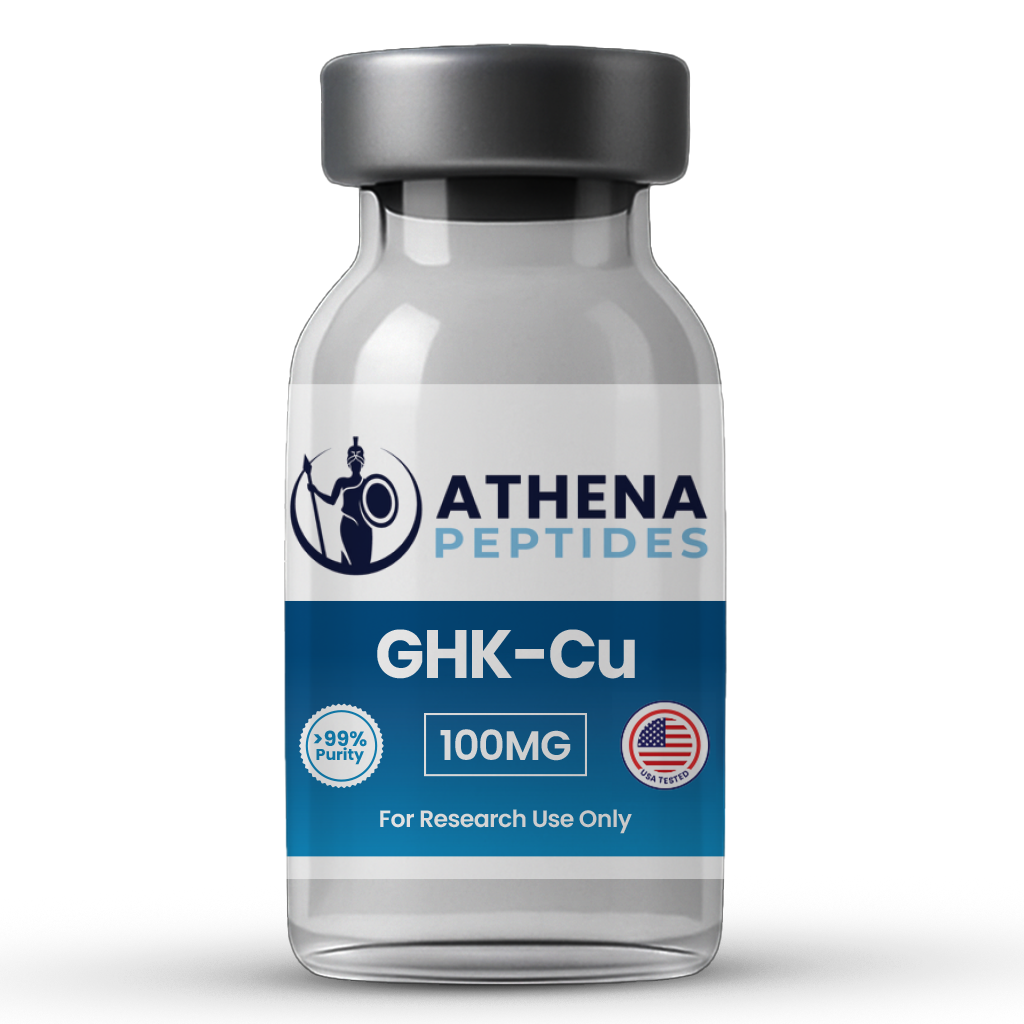
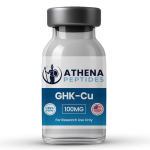
GHK-Cu 100MG
$59.00MG
Research suggests GHK-Cu may support skin health, collagen production, and tissue repair. Studies show this naturally occurring copper peptide activates important cellular pathways linked to healing and regeneration. Scientists are exploring its potential for improving skin density, reducing fine lines, and supporting hair follicle health. GHK-Cu levels naturally decline as we age, making it an exciting area of longevity research.
In stock
Overview
GHK-Cu represents one of nature’s most elegant solutions for tissue repair and regeneration. This small but mighty copper peptide was first discovered in human plasma and has since been found to orchestrate a symphony of healing processes throughout the body. What makes GHK-Cu particularly intriguing is its ability to “reset” gene expression patterns to a more youthful state – it can actually influence over 4,000 human genes, many of which are involved in tissue repair, inflammation control, and antioxidant defense.
Key Characteristics
MOLECULAR PROFILE
- Formula: C14H21CuN604
- Weight: 404.9 g/mol
- CAS: 89030-95-5
- Structure: Gly-His-Lys (with bound copper)
PHYSICAL PROPERTIES
- Form: Blue crystalline powder (the blue color comes from the copper)
- Solubility: Highly water-soluble
- Natural Occurrence: Found in human plasma, saliva, and urine
- Storage: Keep refrigerated 36‑46 °F (2‑8 °C), protect from light
How It Works
GHK-Cu operates as a biological conductor, orchestrating multiple repair and regeneration processes:
Primary Mechanisms
Gene Expression Modulation
Resets genetic patterns to promote healing and reduce inflammation
Collagen Production
Dramatically increases collagen synthesis while improving its organization
Copper Delivery
Provides bioavailable copper essential for numerous enzymatic processes
Growth Factor Activation
Stimulates production of various growth factors crucial for tissue repair
Antioxidant Enhancement
Boosts the body’s natural antioxidant systems
Cellular Effects
Stem Cell Activation
Attracts and activates stem cells to areas needing repair
Blood Vessel Formation
Promotes angiogenesis for improved tissue nutrition
Debris Removal
Activates systems that clear damaged proteins and cellular debris
Barrier Function
Strengthens skin barrier and improves moisture retention
Research Findings
The research on GHK-Cu spans decades and reveals remarkable versatility:
Skin Rejuvenation and Anti-Aging
Studies consistently show GHK-Cu’s ability to reverse signs of aging in skin.
- Modulates expression of 4,000+ human genes
- Upregulates 47 DNA repair genes
- 31.2% of genes show ≥50% expression change
- 59% of affected genes upregulated, 41% suppressed
- Resets gene expression to younger state
Collagen & ECM Enhancement
Comprehensive effects on extracellular matrix components in research models.
- Increases collagen IV synthesis by 25.4-fold with hyaluronic acid (2023)
- Stimulates collagen I, III, and elastin in dermal fibroblasts
- Upregulates decorin and glycosaminoglycan production
- Modulates matrix metalloproteinases and TIMPs
- Restores ECM integrity in aged and photodamaged skin
Wound Healing Acceleration
Research demonstrates exceptional wound healing properties in laboratory studies.
- Accelerates wound closure in diabetic and ischemic models
- Reduces TNF-β and metalloproteinases 2 and 9
- Stimulates VEGF and fibroblast growth factor production
- Increases keratinocyte proliferation and migration
- Improved healing of chronic, non-healing wounds
Anti-Inflammatory Effects
GHK-Cu demonstrates powerful anti-inflammatory properties in research settings.
- Reduces TNF-α induced IL-6 secretion in fibroblasts
- Suppresses NFκB signaling pathway activation
- Decreases pro-inflammatory cytokine expression
- Modulates oxidative stress markers
- Alternative to corticosteroids in research models
Hair Growth Stimulation
Emerging research shows promise for hair regrowth applications.
- Increased hair follicle size in studies
- Extended growth phase of hair cycle
- Improved scalp circulation markers
- Potential reversal of miniaturization in androgenic alopecia
Systemic Anti-Aging Effects
Research reveals broad systemic benefits across multiple physiological markers.
- Endogenous levels: 200 ng/ml (age 20) to 80 ng/ml (age 60)
- Reduced appearance of fine lines and wrinkles
- Improved skin clarity and tone measurements
- Enhanced production of elastin and collagen
- Tightening of loose skin in research models
Structural & Pharmacological Insights
Receptor Binding Modes
Cryo-electron microscopy structures reveal GLP2-T engages both GIPR and GLP-1R through their orthosteric binding pockets in the N-terminal extracellular domain. The C20 fatty acid modification does not directly contact the receptor but positions the peptide for enhanced G protein coupling efficiency.
Transmembrane Domain Conformations
Active-state receptor structures demonstrate GLP2-T stabilizes outward movement of transmembrane helix 6, creating Gs binding interface geometry. The bias toward cAMP signaling at GLP-1R correlates with reduced conformational changes in intracellular loop 3, limiting β-arrestin recruitment.
Islet Synergy Mechanisms
Co-infusion studies demonstrate GIP + GLP-1 produce supraadditive insulin secretion (>2x individual effects). GLP2-T recapitulates this synergy in single-molecule format. Mechanistically, parallel cAMP generation from both receptors amplifies PKA-dependent phosphorylation of KATP channels and voltage-gated calcium channels, maximizing glucose-stimulated insulin secretion.
GIPR Requirement for Efficacy
Genetic ablation studies in human islets confirm GLP2-T’s insulinotropic actions require functional GIPR. In GIPR knockout models, GLP2-T loses ~60% of glucose-lowering capacity, demonstrating GIP signaling is non-redundant despite GLP-1R activation.
Potential Side Effects in Research
GHK-Cu shows an excellent safety profile in research settings:
Skin Application
Occasional mild irritation or redness
Systemic Effects
No significant adverse effects reported in studies
Allergic Reactions
Rare hypersensitivity responses
Copper Sensitivity
Theoretical concern in copper-sensitive subjects
References
- Synergy of GHK-Cu and hyaluronic acid on collagen IV upregulation. Int J Cosmet Sci. 2023.
- The potential of GHK as an anti-aging peptide. Aging Pathobiol Ther. 2022.
- Biotinylated GHK complexes with antioxidant properties. Int J Mol Sci. 2020.
- Regenerative and protective actions of GHK-Cu in light of new gene data. Int J Mol Sci. 2018.
- Effect of copper tripeptide on hair growth mechanisms. Ann Dermatol. 2016.
- GHK peptide modulation of cellular pathways in skin regeneration. Int J Mol Sci. 2015.
- Mechanisms of peptides in preventing aged skin. Int J Cosmet Sci. 2009.