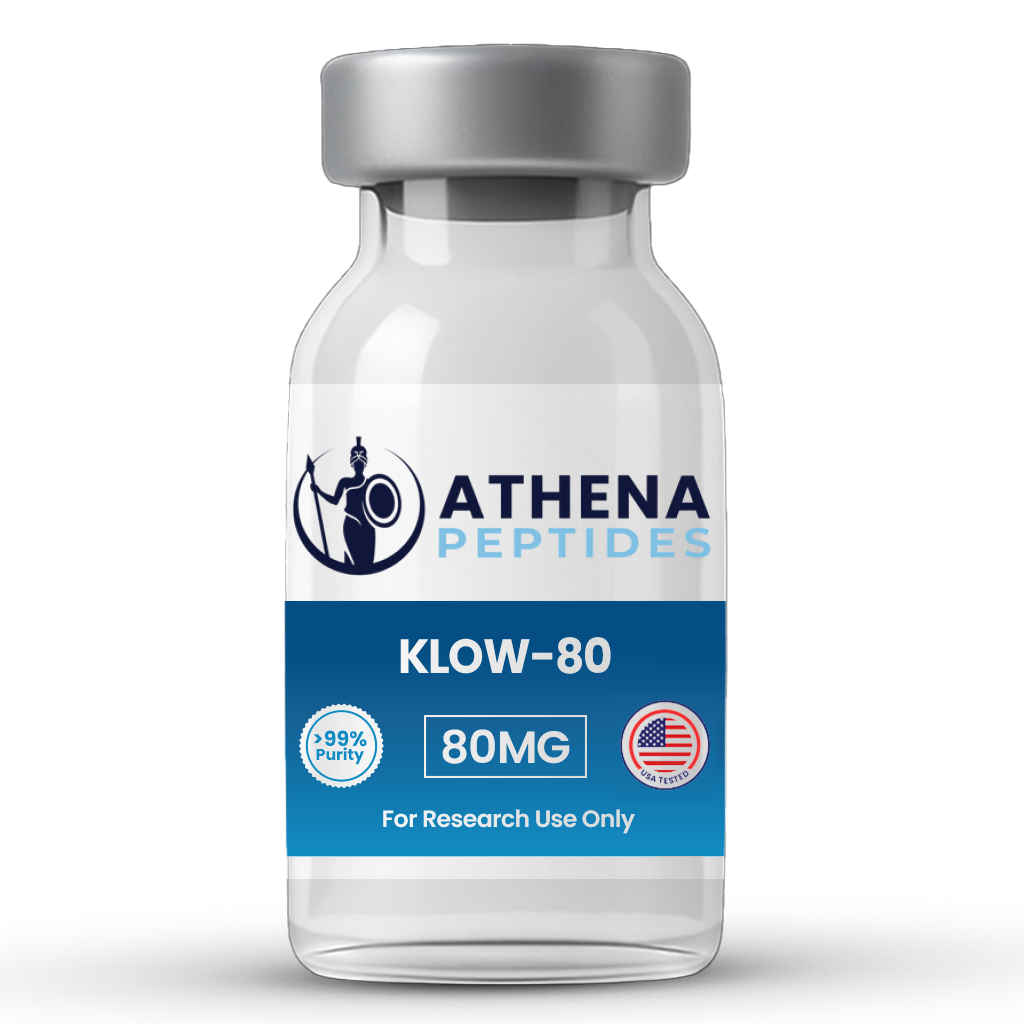
KLOW 80MG
$95.00MG
Research suggests this powerful quad-blend may accelerate healing while fighting inflammation on multiple fronts. Studies show BPC-157 and TB-500 work synergistically to support tissue repair, while GHK-Cu promotes collagen synthesis and skin rejuvenation. KPV adds potent anti-inflammatory action. Together, these four peptides create a comprehensive regenerative formula that researchers prize for wound healing, gut health, and recovery studies.
In stock
Overview
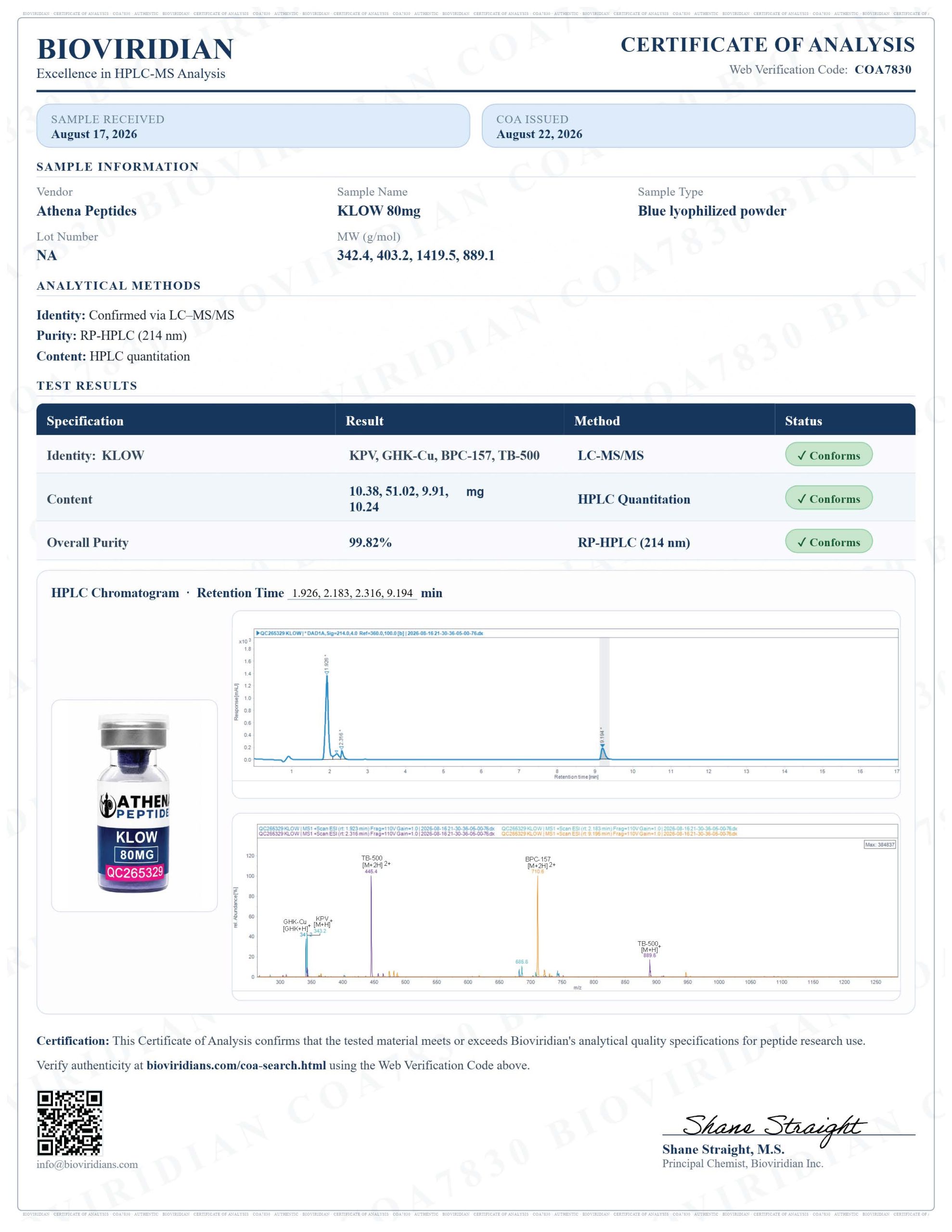
Blend Composition
PEPTIDE COMPONENTS
- BPC-157: 10mg (Body Protection Compound)
- GHK-Cu: 50mg (Copper Peptide)
- TB-500: 10mg (Thymosin Beta-4 Fragment)
- KPV: 10mg (Anti-inflammatory Tripeptide)
PHYSICAL PROPERTIES
- Total Weight: 80mg peptide blend
- Form: Lyophilized powder blend
- Color: White to off-white with blue tint (from GHK-Cu)
- Storage: Keep refrigerated 36‑46 °F (2‑8 °C)
Synergistic Mechanisms
Individual Peptide Actions
BPC-157 Contributions
Angiogenesis promotion, growth factor modulation, nitric oxide regulation, systemic healing coordination
GHK-Cu Functions
Collagen synthesis, antioxidant protection, gene expression modulation, tissue remodeling
TB-500 Activities
Actin sequestration, cell migration enhancement, anti-inflammatory effects, cardiac protection
KPV Benefits
Potent anti-inflammatory action, intestinal barrier protection, immune modulation, antimicrobial properties
Synergistic Effects
Enhanced Angiogenesis
BPC-157 and TB-500 work together to accelerate new blood vessel formation
Comprehensive Anti-inflammation
KPV’s targeted action complements the broader anti-inflammatory effects of other peptides
Matrix Remodeling
GHK-Cu’s collagen effects combine with TB-500’s cellular organization
Accelerated Healing Timeline
Combined effects may significantly reduce overall healing time
Research Applications
Comprehensive Tissue Regeneration
Multi-pathway approach to healing:
- Accelerated wound closure and scar reduction
- Enhanced musculoskeletal repair
- Improved organ tissue recovery
- Synergistic effects on healing timeline
Advanced Anti-Inflammatory Studies
Multiple mechanisms of inflammation control:
- Reduced inflammatory marker expression
- Protection against chronic inflammation
- Intestinal barrier preservation
- Systemic anti-inflammatory effects
Cardiovascular Protection
Combined cardiac benefits:
- Enhanced cardiac tissue repair (TB-500 + BPC-157)
- Improved vascular health (GHK-Cu antioxidant effects)
- Reduced cardiac inflammation (KPV contribution)
- Post-injury cardiac remodeling studies
Neuroprotective Research
Emerging neurological applications:
- Combined neuroprotective effects
- Enhanced nerve regeneration potential
- Reduced neuroinflammation
- Potential in neurodegenerative models
Research Considerations
Reconstitution Protocol
Careful reconstitution required due to multiple peptides with different solubilities
Synergy Assessment
Design studies to evaluate combined vs individual effects
Dosing Calculations
Consider the ratio of peptides when calculating research doses
Stability Monitoring
Blue color from GHK-Cu helps monitor solution integrity
References
- Tepes B, et al. “BPC 157 therapy in inflammatory bowel disease: Clinical evidence.” Biomedicines. 2024.
- Pickart L, Margolina A. “GHK-Cu: Updated research on tissue remodeling and anti-aging.” Int J Mol Sci. 2023.
- Pipes GC, Yang J. “Thymosin β4: Mechanisms and therapeutic applications in regeneration.” Int J Mol Sci. 2023.
- Zhang C, et al. “KPV peptide nanoparticles for inflammatory disease treatment.” J Control Release. 2024.
- Lee HJ, et al. “Combinatorial peptide therapies for enhanced tissue regeneration.” Adv Drug Deliv Rev. 2023.