LL-37 Peptides
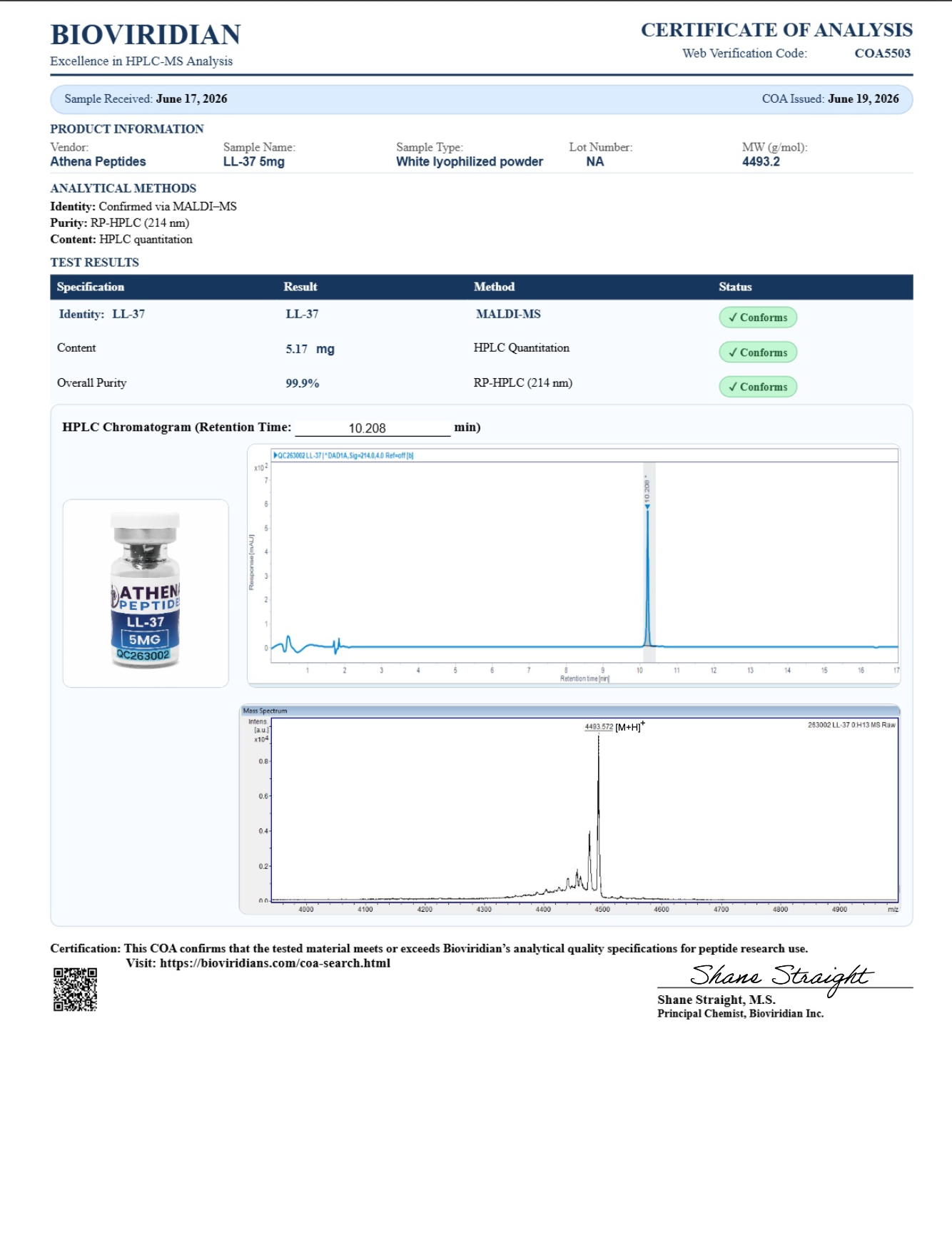
LL-37 is a naturally occurring antimicrobial peptide found in the human body and is part of the innate immune system; the body’s first line of defense. It belongs to the cathelicidin family of peptides and is produced by various cell types, including immune cells and epithelial cells. In laboratory research, LL-37 is widely studied for its interactions with microbes, immune cells, and cellular signaling pathways.
Researchers use LL-37 as a model compound to better understand how antimicrobial peptides function beyond direct microbial interactions, including their broader roles in immune regulation and cellular communication.
Overview
LL-37 is derived from a larger precursor protein known as hCAP-18. Through enzymatic processing, LL-37 is released as the biologically active fragment. Its structure allows it to interact with cell membranes and signaling molecules, making it especially useful in experimental studies focused on immune response, inflammation, and host-defense mechanisms.
Because LL-37 participates in multiple biological pathways, it is frequently examined in research involving immune balance, inflammation signaling, and peptide-mediated cellular responses.
Chemical Makeup
LL-37 is a linear peptide made up of 37 amino acids and carries an overall positive charge. In environments that mimic biological membranes, the peptide forms an α-helical structure. This shape allows LL-37 to associate with negatively charged membranes, a feature that has been extensively studied using biochemical and biophysical methods.
Its well-characterized structure makes LL-37 a common subject in structure-function research, helping scientists understand how peptide shape and charge influence biological activity.
LL-37 Peptide and Inflammatory Response
In research models, LL-37 has been shown to influence inflammatory processes by interacting with immune cells and signaling molecules. Studies examine how LL-37 affects the release of cytokines, the movement of immune cells toward sites of inflammation, and the activation of inflammatory signaling pathways.
These investigations help researchers explore how antimicrobial peptides may play regulatory roles in inflammation, rather than acting solely as antimicrobial agents.
LL-37 Peptide and Autoimmunity Models
LL-37 is frequently studied in autoimmune research because it can bind to nucleic acids and interact with receptors involved in innate immune activation. In experimental models, these interactions are used to investigate how endogenous peptides might contribute to abnormal immune signaling or sustained immune activation.
Such studies provide insight into mechanisms of immune dysregulation and help researchers better understand how self-derived molecules may influence autoimmune-like responses under certain conditions.
LL-37 Peptide and Arthritis
In laboratory models related to arthritis, LL-37 is examined for its presence in inflamed joint environments and its interaction with immune mediators. Research focuses on how LL-37 may influence immune cell recruitment, inflammatory signaling, and molecular communication within joint tissues.
These studies are used to better characterize the inflammatory landscape associated with joint-related immune activity.
LL-37 and Tissue Repair
LL-37 has also been studied in research related to tissue repair and wound biology. Experimental findings suggest that LL-37 can influence cellular behaviors such as migration, proliferation, and signaling between immune and structural cells.
Because of these properties, LL-37 is often included in studies examining how immune-related peptides contribute to tissue remodeling and cellular coordination during repair processes.
LL-37 and Cancer Cells
In cancer research, LL-37 has been investigated for its interactions with various cancer cell lines and tumor-associated environments. Researchers study how LL-37’s membrane-active nature and signaling effects influence cellular behavior, immune recognition, and communication within the tumor microenvironment.
These studies are exploratory and focused on understanding molecular interactions rather than therapeutic application.
LL-37 and GI Tract
LL-37 is also relevant in gastrointestinal research due to its role in mucosal defense and epithelial signaling. In experimental models, LL-37 is examined for its involvement in maintaining barrier integrity, interacting with gut microbes, and supporting immune communication within the GI tract.
This makes LL-37 a useful research tool in studies focused on host-microbe balance and gastrointestinal immune function.
References
Dürr, U. H. N., Sudheendra, U. S., & Ramamoorthy, A. (2006). LL-37, the only human member of the cathelicidin family of antimicrobial peptides. Biochimica et Biophysica Acta, 1758(9), 1408–1425.
Hancock, R. E. W., & Sahl, H.-G. (2006). Antimicrobial and host-defense peptides as new anti-infective strategies. Nature Biotechnology, 24(12), 1551–1557.
Mookherjee, N., et al. (2009). Modulation of the innate immune response by host defense peptides. Journal of Immunology, 182(9), 4995–5002.
Lande, R., et al. (2007). Plasmacytoid dendritic cells sense self-DNA coupled with antimicrobial peptide. Nature, 449(7162), 564–569.
Kahlenberg, J. M., & Kaplan, M. J. (2013). Little peptide, big effects: the role of LL-37 in inflammation and autoimmune disease. Journal of Immunology, 191(10), 4895–4901.