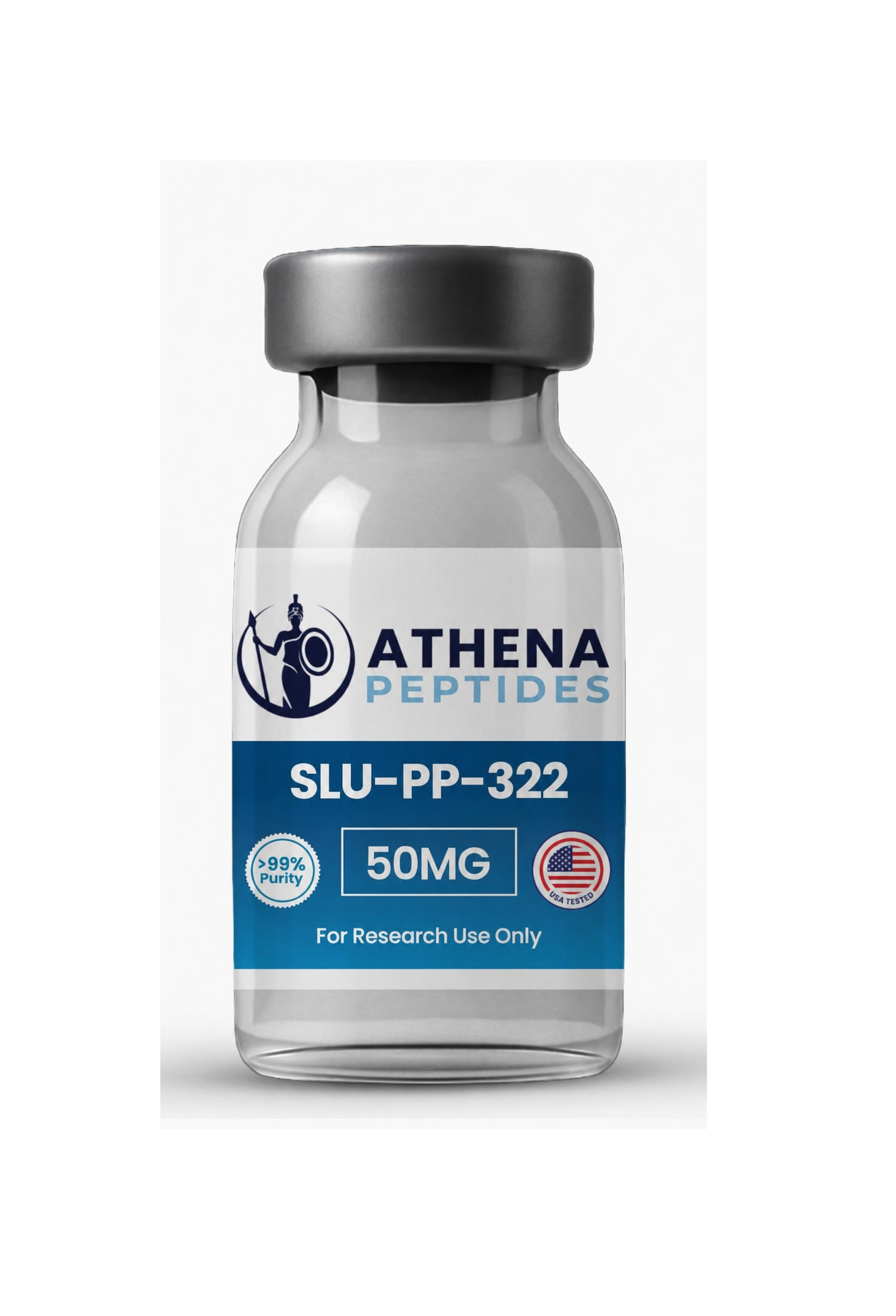
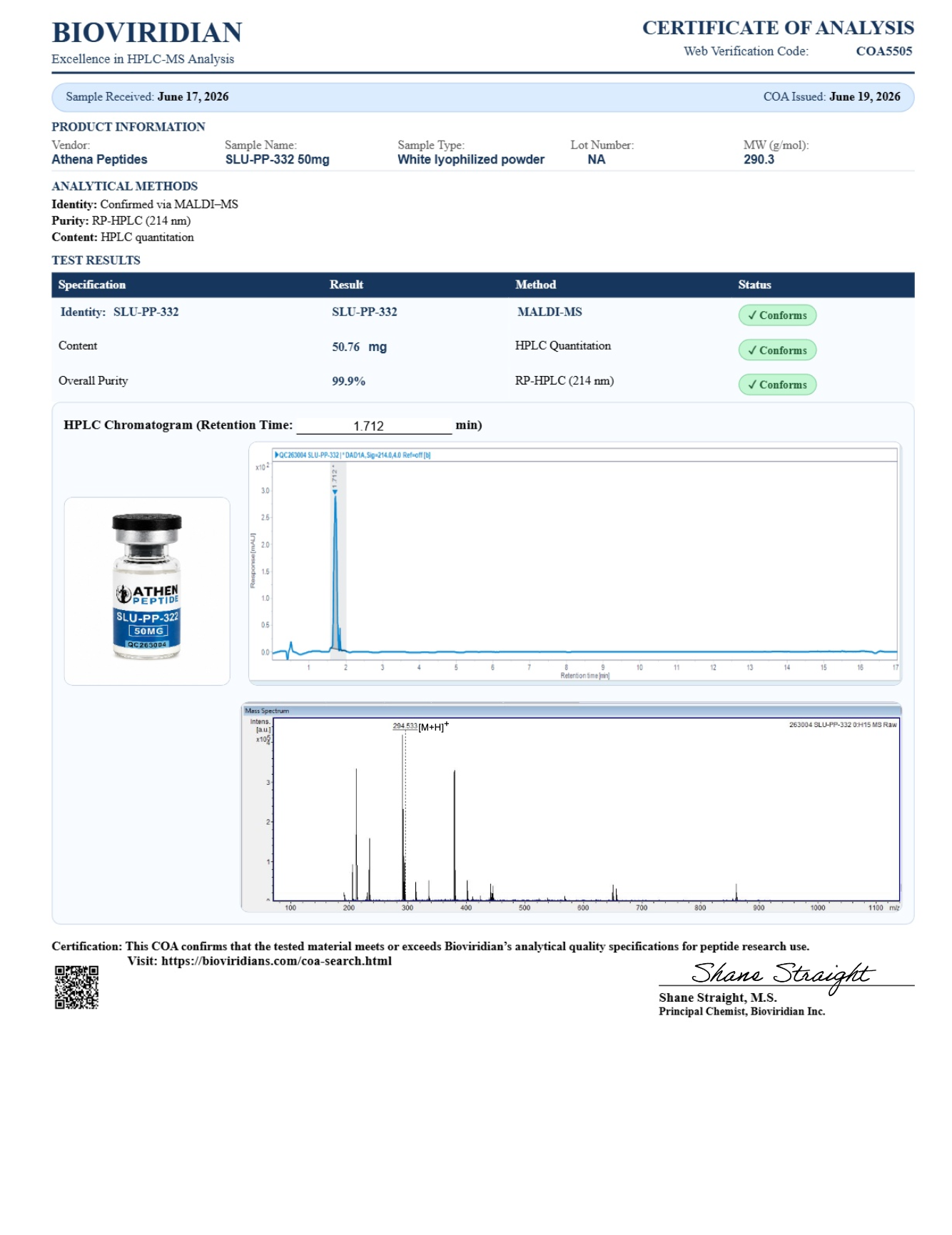
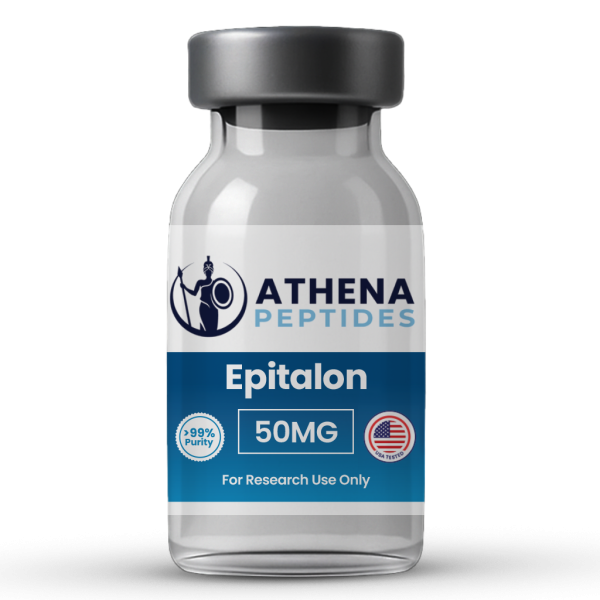
SLU-PP-322 50MG
$150.00MG
SLU-PP-332 is a synthetic small-molecule agonist of the estrogen-related receptor (ERR) family — a class of orphan nuclear receptors that regulate mitochondrial biogenesis, oxidative phosphorylation, and cellular energy homeostasis.
In stock
Overview
As a pharmacological exercise mimetic, SLU-PP-332 has attracted significant interest from researchers investigating metabolic pathways, mitochondrial function, and the molecular mechanisms underlying exercise adaptation. The compound reproduces many of the gene-expression changes associated with aerobic exercise in preclinical models, offering investigators a controlled tool for studying these pathways without the confounding variables of physical activity protocols.
Key Characteristics
MOLECULAR PROFILE
- Formula: C18H14N2O2
- Appearance: White to off-white solid
- Purity: ≥98% (typical research-grade specification)
- Sequence: 16 amino acids
PHYSICAL PROPERTIES
- Solubility: Highly soluble in DMSO (75 mg/mL); limited aqueous solubility
- Storage: Stable for up to 2 years at −20°C under desiccated conditions
How It Works
MOTS-c operates like a master switch for cellular metabolism, activating multiple pathways that help cells use energy more efficiently. When released from mitochondria, this peptide travels throughout the cell and even into the bloodstream, where it can influence metabolism on a whole-body level.
Primary Mechanisms
AMPK Pathway Activation
Acts as your cells’ fuel gauge sensor. When AMPK is activated, cells become more efficient at burning fat for energy and maintaining healthy insulin sensitivity.
Metabolic Regulation
Influences glucose uptake from the bloodstream and optimizes cellular energy utilization across all systems.
Secondary Effects
Gene Expression Modulation
Influences gene expression related to metabolism and aging, potentially helping cells maintain their youthful function longer.
Multi-Level Approach
This comprehensive mechanism makes MOTS-c a fascinating subject for metabolic and longevity research.
Research Findings
Laboratory investigations have revealed multiple areas where MOTS-c demonstrates significant research potential.
Metabolic Health Enhancement
- Exercise-mimetic properties demonstrated in 2024 studies
- Improves insulin sensitivity through AMPK activation
- Reduces cognitive decline in aging models (2023)
- Enhances mitochondrial biogenesis and oxidative capacity
- Increases glucose uptake independent of insulin
- Better blood sugar control in high-fat diet models
- Reduced fat accumulation in research subjects
- Potential applications in metabolic disorder research
Cellular Energy Optimization
- Promotes burning of fatty acids for energy
- Increased ATP production in treated cells
- Improved endurance in animal models
- More efficient energy utilization overall
Neuroprotective Properties
- Protection from oxidative stress
- Reduced age-related neuronal damage
- Improved cognitive function in models
- Decreased neuroinflammation markers
Longevity and Healthy Aging
- Studies show potential for extending healthspan in research models.
- Extended lifespan in certain models
- Activation of longevity-associated genes
- Protection from cellular stress
- Natural decline with age makes it a key target
Cardiovascular Support
- Protection of heart tissue from damage
- Reduced inflammation in blood vessels
- Better heart muscle performance
- Improved cardiovascular function markers
Potential Side Effects in Research
Metabolic Monitoring
Potential changes in blood glucose levels requiring monitoring in diabetic research models
Drug Interactions
Limited data on interactions with other compounds or medications
Administration Effects
Possible mild injection site reactions in animal studies
Long-term Considerations
Theoretical concerns about long-term metabolic adaptations that require further investigation
References
- Billon C, Sitaula S, Burris TP. “Inhibition of RORα/γ suppresses atherosclerosis via inhibition of both cholesterol absorption and inflammation.” Mol Metab. 2016;5(10):997–1005.
- Billon C, et al. “SLU-PP-332 activates an ERR-dependent exercise gene program and increases exercise endurance.” Reported in Wansapura et al. 2024 (reference therein).
- Wansapura J, et al. “A Synthetic ERR Agonist Alleviates Metabolic Syndrome.” J Pharmacol Exp Ther. 2024;388(2):232–240. PMID: 37739806. DOI: 10.1124/jpet.123.001733.
- Shahien AA, et al. (2020). Development of pan-ERR agonists. Referenced in Wansapura et al. 2024.
- Mao L, et al. (2022). ERRα activation via a synthetic agonist improved fatty liver disease in vivo. Referenced in Wansapura et al. 2024.
- “Novel Pan-ERR Agonists Ameliorate Heart Failure Through Enhanced Cardiac Fatty Acid Metabolism.” Circulation. 2023. DOI: 10.1161/CIRCULATIONAHA.123.066542.