
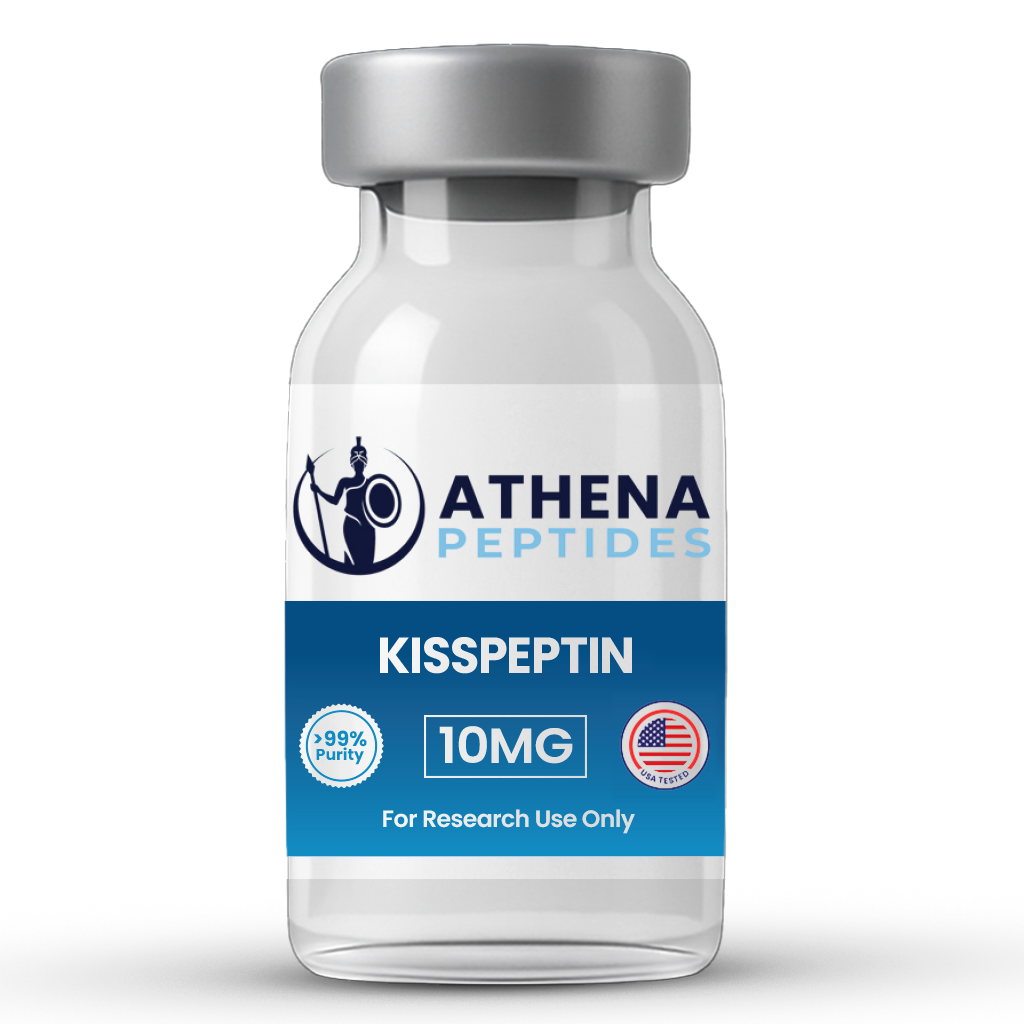
Kisspeptin 10MG
$45.00MG
In stock
Overview
Kisspeptin is a naturally occurring peptide studied for its essential role in reproductive hormone regulation and GnRH (gonadotropin-releasing hormone) signaling. It is a key player in activating the hypothalamic-pituitary-gonadal (HPG) axis, making it a primary focus in laboratory research involving puberty onset, fertility regulation, and endocrine balance.
Preclinical models have explored Kisspeptin for its ability to influence LH and FSH release, modulate sex hormone production, and regulate reproductive behavior. Its research applications extend to studies on hypothalamic activity, menstrual function, testicular signaling, and the broader landscape of hormonal rhythms.
Specifications
- Product: Kisspeptin
- Purity: 99% (HPLC Verified)
- Form: White Lyophilized Powder
- Solubility: Soluble in sterile water
- Storage Conditions: Store in a cool, dry place; refrigerate after reconstitution
- Stability: 24-months when properly stored
Why Choose ATHENA PEPTIDES Kisspeptin?
Research Grade Purity: Verified purity >99% by third-party HPLC analysis.
Secure Packaging: Designed to maintain peptide stability and prevent degradation during shipment and storage.
Rapid Fulfillment: Most orders ship within 24 hours after payment confirmation.
Researcher Support: Expert customer service tailored to licensed research professionals.
Summary of Preclinical Research Findings
GnRH Activation and Hormone Signaling
Kisspeptin is known to directly stimulate GnRH secretion, initiating downstream release of luteinizing hormone (LH) and follicle-stimulating hormone (FSH). This has made it a central subject in studies exploring puberty regulation, sex hormone balance, and ovarian and testicular function.
Fertility and Reproductive Health
Research has shown Kisspeptin’s involvement in reproductive cycle regulation, ovulation timing, and spermatogenesis. It is frequently studied in models of infertility, PCOS, and hypogonadotropic hypogonadism to understand hormone feedback mechanisms and potential therapeutic pathways.
Hypothalamic-Pituitary Axis and Sexual Maturation
Laboratory models have explored how Kisspeptin helps regulate neuroendocrine signaling through the hypothalamic-pituitary axis. Findings point to its influence on pubertal onset, sexual differentiation, and potential modulation of metabolic and behavioral cues linked to reproductive health.
Suggested Areas of Research
- GnRH and LH/FSH signaling pathways
- Reproductive hormone balance and feedback
- Puberty onset and sexual maturation
- Female cycle and ovulatory models
- Male fertility and testicular function
- Neuroendocrine regulation
- Hypothalamic-pituitary-gonadal axis studies
- PCOS, hypogonadism, and hormone disruption models
Handling & Storage Guidelines
- Store lyophilized peptide in a cool, dry place
- Refrigerate after reconstitution
- Use sterile laboratory solvents
- Protect from heat, light, and moisture
- Avoid repeated freeze-thaw cycles
For Research Use Only
Kisspeptin is supplied by Athena Peptides exclusively for laboratory testing and in vitro research.
- Not for human or animal use
- Not for medical or diagnostic purposes
- Purchase confirms that the buyer is a qualified researcher, 18 years or older
- All usage must comply with local laws and lab safety guidelines
References
Kisspeptin in Reproductive Hormone Regulation
Oakley, A. E. et al. (2009). Kisspeptin signaling in the brain and reproductive axis. Endocrine Reviews, 30(6), 713–743. https://academic.oup.com/edrv/article-pdf/30/6/713/10335003/edrv0713.pdf
Seminara, S. B. et al. (2006). Kisspeptin-GPR54 signaling and puberty onset. Human Reproduction Update, 12(5), 631–639. https://academic.oup.com/humupd/article-pdf/12/5/631/2335738/dml023.pdf
Pinilla, L. et al. (2012). The kisspeptin system and reproductive function. Endocrinology, 156(4), 1218–1229. https://academic.oup.com/endo/article-pdf/156/4/1218/8868879/endo1218.pdf
Kisspeptin in Fertility and Hypothalamic Signaling
Jayasena, C. N. et al. (2014). Kisspeptin and reproductive hormone release in humans. Human Reproduction Update, 20(4), 485–500. https://academic.oup.com/humupd/article-pdf/20/4/485/9731468/dmu009.pdf
Roa, J. et al. (2008). Hypothalamic control of reproduction through Kiss1 neurons. Human Reproduction Update, 15(2), 203–212. https://academic.oup.com/humupd/article-pdf/15/2/203/1746298/dmn058.pdf
Clarke, I. J. (2010). Kisspeptin and GPR54: Critical gatekeepers of puberty. Physiology, 25(3), 171–181. https://journals.physiology.org/doi/pdf/10.1152/physiol.00009.2010
Kisspeptin in PCOS and Infertility Models
Gutiérrez-Pascual, E. et al. (2015). Disrupted kisspeptin signaling in PCOS models. Endocrinology and Metabolism, 30(2), 124–132. https://synapse.koreamed.org/pdf/10.3803/enm.2015.30.2.124
Millar, R. P. et al. (2015). Central and peripheral actions of kisspeptin in humans. NIHMS712569. https://pmc.ncbi.nlm.nih.gov/articles/PMC4587393/pdf/nihms712569.pdf
Skorupskaite, K. et al. (2018). Kisspeptin’s role in human fertility regulation. Human Reproduction Update, 25(3), 326–344. https://academic.oup.com/humupd/article-pdf/25/3/326/28562032/dmy046.pdf
