
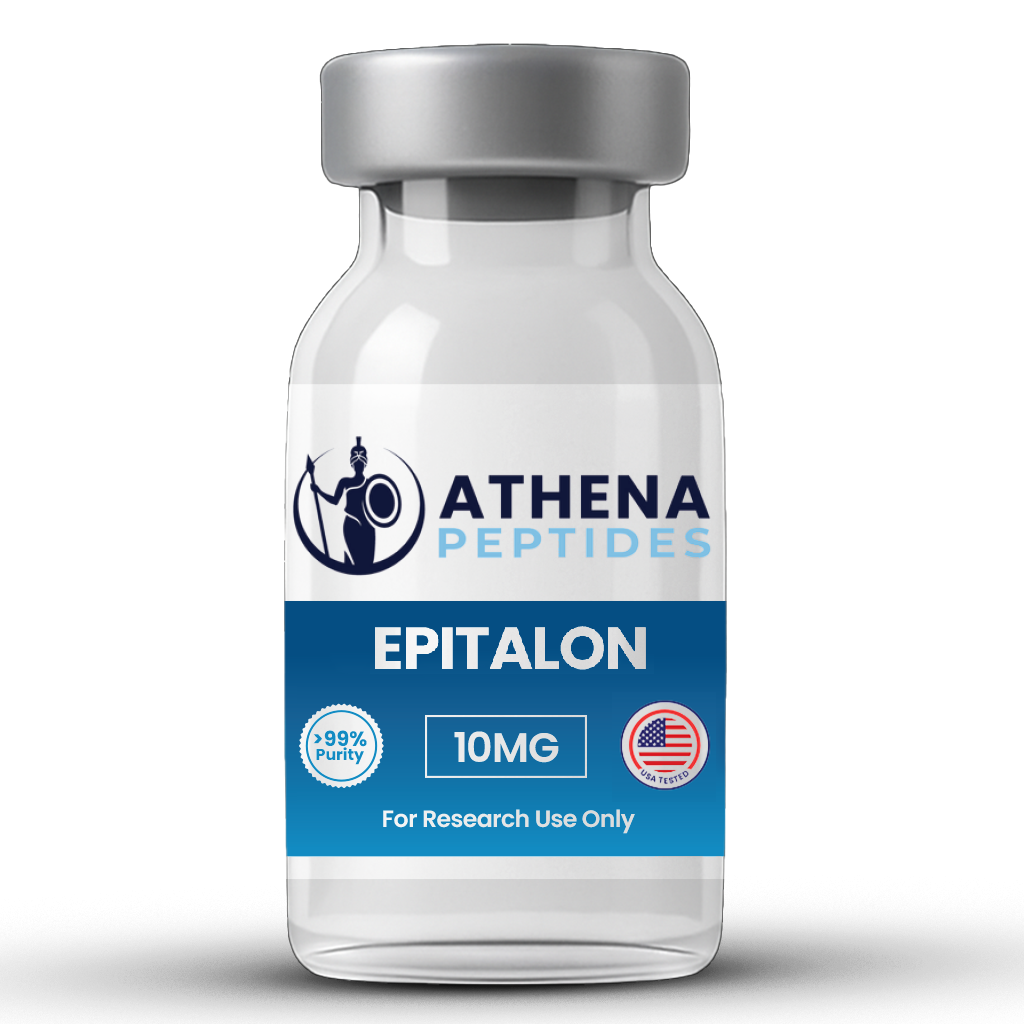
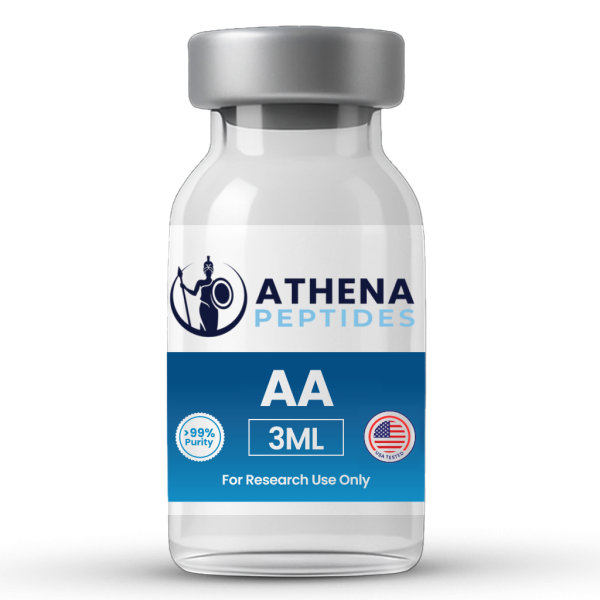
Epitalon 10MG
$33.00MG
Descriptor:
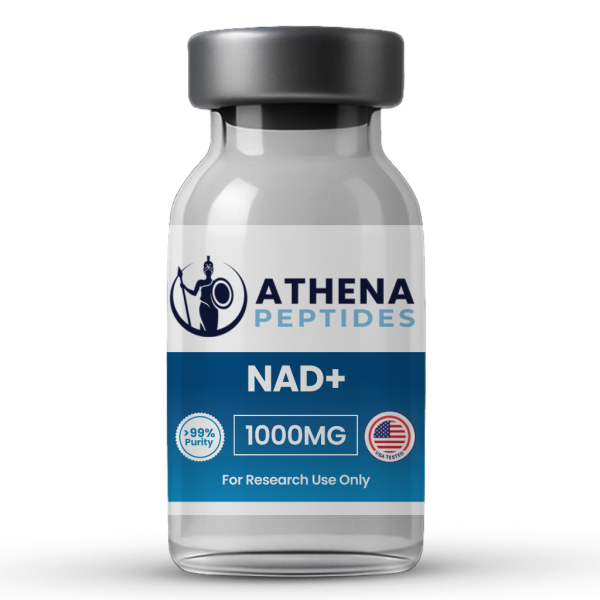
Oxidized Form | Metabolic Coenzyme
Details:
- Purity: ≥ 98% (HPLC)
- Molecular Formula: C21H27N7O14P2
- Molecular Weight: 663.43 g/mol
- Form: Lyophilized powder
- Storage: –20°C, desiccated, protected from light
- Solubility: Water, PBS, or buffer (pH ~7)
Intended Use:
For research purposes only.
In stock
Overview
Epithalon, also known as Epitalon or Epithalone, is like a cellular fountain of youth in peptide form. Originally discovered in the pineal gland, this four-amino acid chain has captured the attention of longevity researchers worldwide. What makes Epithalon particularly fascinating is its potential to influence the very mechanisms of aging at the chromosomal level, including the maintenance of telomeres – the protective caps on our DNA that shorten as we age.
Key Characteristics
MOLECULAR PROFILE
- Formula: C14H22N4O9
- Weight: 390.34 g/mol
- CAS: 307297-39-8
- Structure: Ala-Glu-Asp-Gly
PHYSICAL PROPERTIES
- Form: White lyophilized powder
- Solubility: Readily dissolves in water
- Origin: Synthetic version of epithalamin
- Storage: Keep refrigerated 36‑46 °F (2‑8 °C)
How It Works
Primary Mechanisms
Telomerase Activation
May stimulate telomerase enzyme, potentially maintaining or lengthening telomeres
Melatonin Regulation
Helps normalize melatonin production and circadian rhythms
Antioxidant Enhancement
Reduces oxidative stress and protects cells from damage
Cellular Protection
DNA Preservation
Helps maintain genetic integrity
Mitochondrial Support
Enhances cellular energy production
Neuroendocrine Balance
Helps regulate hormonal systems
Research Findings
Anti-Aging Effects
- Extended lifespan in research models
- Improved markers of biological age
- Enhanced cellular regeneration
- Reduced age-related deterioration
- Maintained youthful gene expression patterns
Sleep and Circadian Rhythm
- Normalized melatonin production
- Improved sleep architecture
- Better circadian rhythm synchronization
- Enhanced deep sleep phases
- Reduced sleep disturbances with aging
Neuroprotective Properties
- Improved cognitive function in aging models
- Protection against neurodegenerative processes
- Enhanced memory and learning
- Reduced brain inflammation
- Maintained neural plasticity
Cardiovascular Benefits
- Improved cardiovascular function
- Better blood pressure regulation
- Enhanced vascular elasticity
- Reduced oxidative stress in blood vessels
- Protection against age-related cardiac changes
Immune System Support
- Restoration of T-cell function
- Improved immune response in aging
- Better resistance to infections
- Balanced inflammatory responses
- Enhanced immune surveillance
Vision and Eye Health
- Protection against age-related vision decline
- Improved retinal function
- Reduced cataract formation
- Better intraocular pressure regulation
Potential Side Effects in Research
General Tolerance
Extremely well-tolerated across studies
No Drug Interactions
No significant interactions reported
No Toxicity
No toxic effects observed even at high doses
Long-term Safety
Studies show safety with extended use
Minimal Side Effects
Rare reports of mild injection site reactions
References
- Khavinson VK, et al. “Epithalon peptide induces telomerase activity and telomere elongation in human somatic cells.” Bull Exp Biol Med. 2003.
- Anisimov VN, et al. “Effect of Epitalon on biomarkers of aging, life span and spontaneous tumor incidence.” Biogerontology. 2003.
- Phelan J, et al. “Improving biological age, telomere length, and cognition: A case report.” Restor Med. 2024.
- Korkushko OV, et al. “Normalizing effect of the pineal gland peptides on the daily melatonin rhythm.” Bull Exp Biol Med. 2004.
- Khavinson V, et al. “AEDG Peptide (Epitalon) Stimulates Gene Expression.” Molecules. 2020.
- Goncharova ND, et al. “Pineal peptides restore the age-related disturbances in hormonal functions.” Exp Gerontol. 2005.
- Khavinson VK, Morozov VG. “Peptides of pineal gland and thymus prolong human life.” Neuro Endocrinol Lett. 2003.
- Anisimov VN, Khavinson VK. “Peptide bioregulation of aging: results and prospects.” Biogerontology. 2010.
- Khavinson V, et al. “Neuroprotective Effect of EDR Peptide.” Pharmaceuticals. 2021.
- Kozina LS, et al. “Investigation of the correction effect of livagen peptide.” Bull Exp Biol Med. 2008.
