
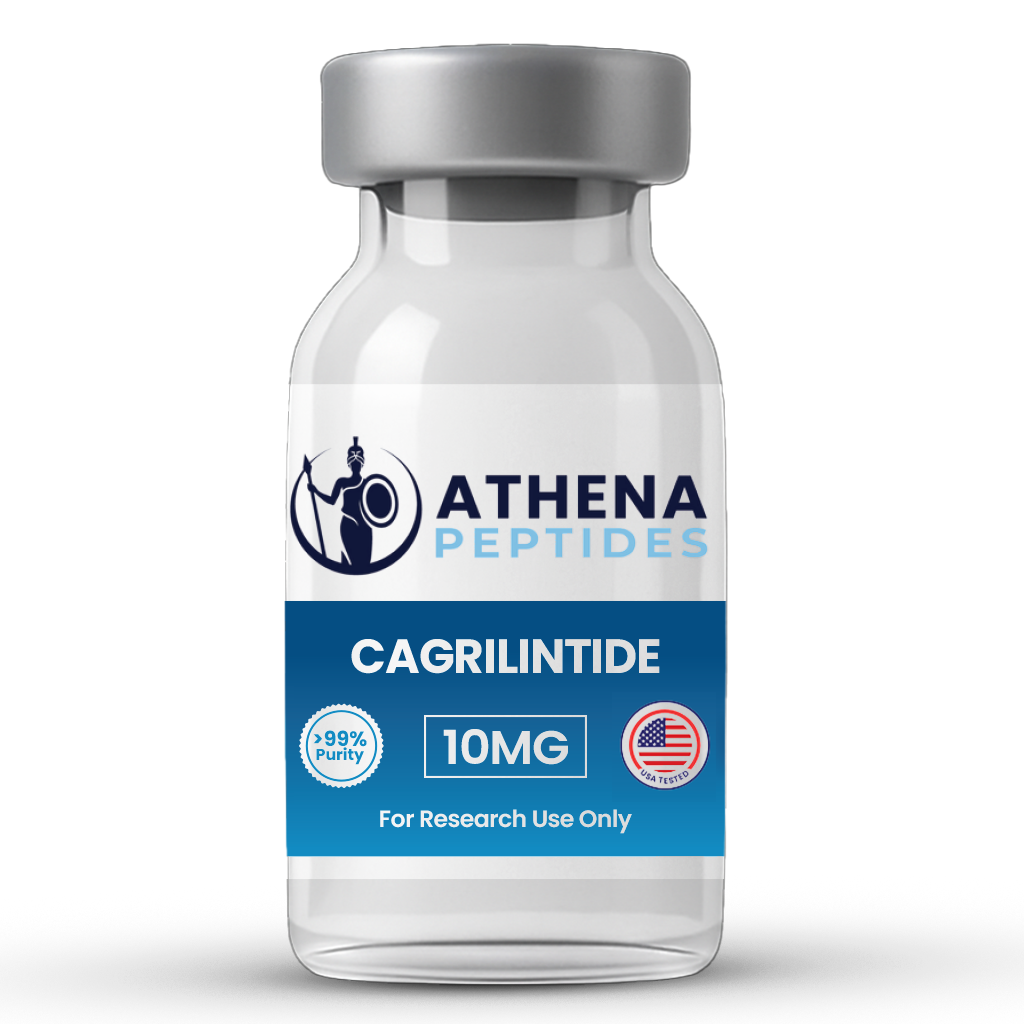
Cagrilintide 10MG
$98.00
Descriptor:
Cagrilintide is a long-acting research peptide being studied for appetite control and weight management. In clinical trials, researchers found it helps promote feelings of fullness and supports healthy metabolism. This once-weekly peptide offers extended stability, making it valuable for studies on how the body regulates hunger and energy. Scientists are exploring its potential as a powerful tool for metabolic research.
Details:
- Purity: ≥ 98% (HPLC)
- Molecular Formula: C21H27N7O14P2
- Molecular Weight: 663.43 g/mol
- Form: Lyophilized powder
- Storage: –20°C, desiccated, protected from light
- Solubility: Water, PBS, or buffer (pH ~7)
Intended Use:
For research purposes only.
In stock
Overview
Imagine your body has a natural “fullness signal” that tells your brain when you’ve had enough to eat – that’s amylin. Now picture scientists creating a super-charged version of this signal that lasts much longer and works more effectively. That’s Cagrilintide – a cutting-edge research peptide that mimics and enhances your body’s natural appetite control system.
Cagrilintide is a synthetic analog of amylin, specifically engineered to overcome the limitations of the natural hormone. While regular amylin breaks down quickly in the body, Cagrilintide has been modified to stick around longer, giving researchers more time to study its effects on metabolism and appetite regulation.
Key Characteristics
MUSCULAR PROFILE
- Formula: C194H312N54O59S2
- Weight: 4,409 g/mol
- CAS: 1415456-99-3
- Structure: Modified amylin analog
DETAILS:
- Purity: ≥ 98% (HPLC)
- Molecular Formula: C21H27N7O14P2
- Molecular Weight: 663.43 g/mol
- Form: Lyophilized powder
- Storage: –20°C, desiccated, protected from light
- Solubility: Water, PBS, or buffer (pH ~7)
How It Works
Cagrilintide works like a master key that fits into special locks (receptors) in your brain, particularly in an area called the area postrema – think of it as your body’s “appetite control center.” When Cagrilintide binds to these receptors, it sends signals that can influence how hungry you feel and how your body processes food.
Primary Mechanisms
Brain Signaling
It activates amylin receptors in specific brain regions that control appetite and food intake
Digestive Regulation
It may slow down how quickly food moves through your stomach, helping maintain feelings of fullness
Metabolic Effects
Glucose Metabolism
It can influence how your body handles glucose and energy metabolism
Enhanced Stability
While natural amylin might work for minutes, Cagrilintide can remain active for hours, providing researchers with extended observation windows
Research Findings
Studies have explored Cagrilintide’s potential in understanding metabolic processes, weight management, and glucose homeostasis. Research has provided valuable insights into amylin receptor activation and metabolic regulation.
Metabolic Research Applications
Studies have explored Cagrilintide’s potential in understanding metabolic processes. Research has shown it may offer insights into:
- How the body regulates appetite and satiety signals
- The relationship between amylin signaling and glucose metabolism
- Long-term metabolic adaptations to peptide interventions
Weight Management Studies
- Enhanced receptor activation compared to native amylin
- Sustained metabolic effects due to improved stability
- Potential synergistic effects when combined with other research compounds
Diabetes Research
- Effects on postprandial (after-meal) glucose levels
- Interactions with insulin signaling pathways
- Long-term metabolic outcomes in diabetic models
Potential Side Effects in Research
During research studies, scientists have observed various responses to Cagrilintide administration. These observations help researchers better understand the peptide’s biological activity and optimal research protocols.
Gastrointestinal Effects
Changes in digestive patterns or gastric emptying rates
Injection Site Reactions
Local responses at administration sites in research models
Metabolic Changes
Alterations in glucose levels or energy metabolism
Appetite Modifications
Changes in feeding behavior in research subjects
These observations help researchers better understand the peptide’s biological activity and optimal research protocols.
References
- Enebo, L. B., et al. (2021). “Safety, tolerability, pharmacokinetics, and pharmacodynamics of concomitant administration of multiple doses of cagrilintide with GLP1-S 2·4 mg for weight management: a randomised, controlled, phase 1b trial.” The Lancet, 397(10286), 1736-1748.
- Lau, D. C., et al. (2021). “Once-weekly cagrilintide for weight management in people with overweight and obesity: a multicentre, randomised, double-blind, placebo-controlled and active-controlled, dose-finding phase 2 trial.” The Lancet, 398(10317), 2160-2172.
- Frias, J. P., et al. (2023). “Efficacy and safety of co-administered once-weekly cagrilintide 2·4 mg with once-weekly GLP1-S 2·4 mg in type 2 diabetes: a multicentre, randomised, double-blind, active-controlled, phase 2 trial.” The Lancet, 402(10403), 720-730.
- Wharton S, et al. “CagriSema for obesity management: SURMOUNT-5 trial design and rationale.” Obesity (Silver Spring). 2024.
- Kadowaki T, et al. “Cagrilintide/GLP1-S (CagriSema) combination for obesity: A systematic review.” Diabetes Obes Metab. 2024.
- Drucker DJ. “Amylin analogues for obesity: New advances with cagrilintide.” Cell Metab. 2023.
