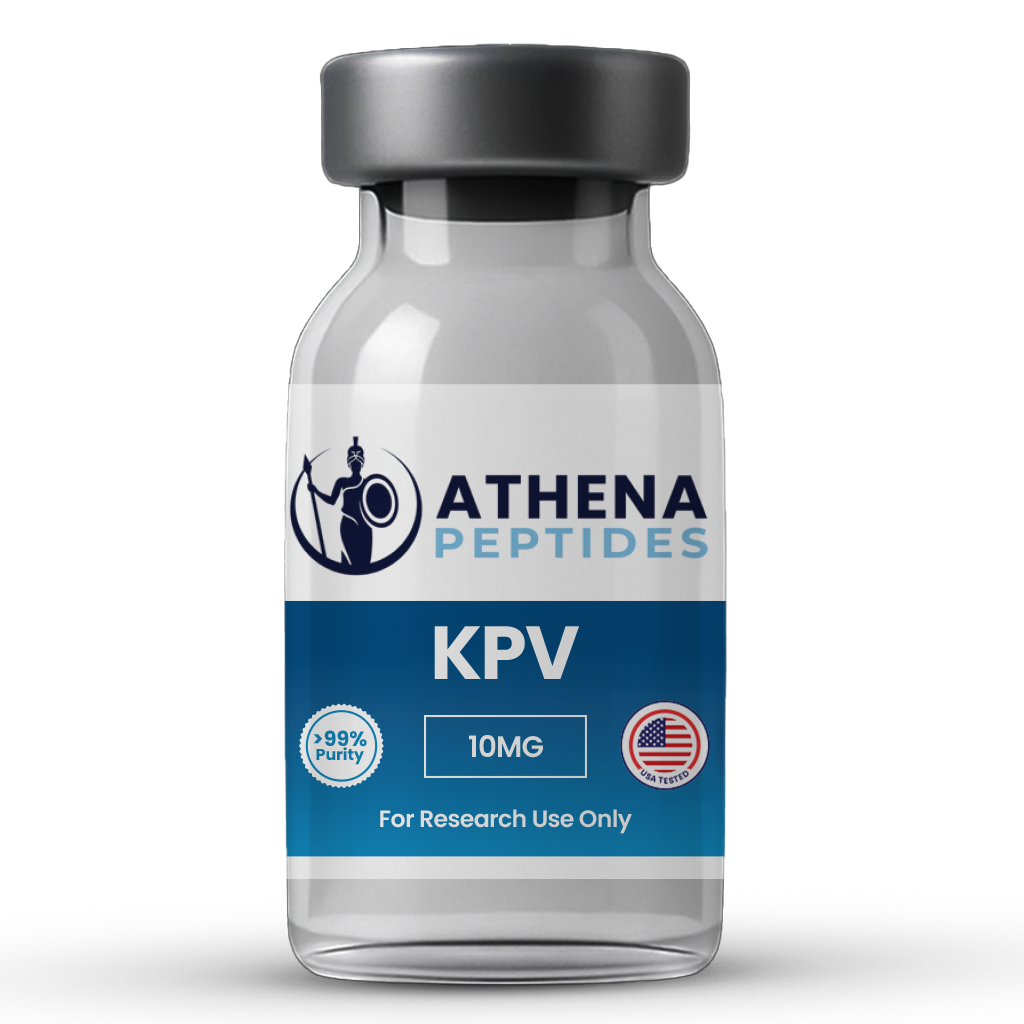
KPV 10MG
$45.00MG
Research shows KPV may help calm inflammation throughout the body. This small but mighty tripeptide comes from a natural hormone and has caught researchers’ attention for its potential to support gut health, promote skin healing, and reduce inflammatory responses. Studies suggest it works by blocking pathways that trigger inflammation at the cellular level. Scientists are exploring its use for digestive issues and skin conditions alike.
In stock
Overview
Imagine your body’s inflammatory response as a fire alarm system. Sometimes this alarm gets stuck in the “on” position, causing unnecessary inflammation even when there’s no real threat. KPV works like a specialized technician that can help reset this alarm system, potentially turning down the volume on excessive inflammatory signals.
KPV is a synthetic tripeptide-essentially a chain of three amino acids (lysine, proline, and valine) linked together. This small but mighty molecule is derived from alpha-melanocyte-stimulating hormone (α-MSH), a naturally occurring compound in the body known for its anti-inflammatory properties. What makes KPV special is that it represents the smallest active fragment of α-MSH that still retains powerful anti-inflammatory capabilities, making it an efficient subject for research studies.
Key Characteristics
MOLECULAR PROFILE
- Formula: C16H29N3O4
- Weight: 327.42 g/mol
- CAS: 67727-97-3
- Structure: Lysine-Proline-Valine
PHYSICAL PROPERTIES
- Form: White to off-white lyophilized powder
- Solubility: Water-soluble (≥1 mg/mL)
- Storage: Required with bacteriostatic water
- Reconstitution: Store in a cool, dry place away from light
How It Works
KPV operates through a fascinating mechanism that researchers are still working to fully understand. Think of inflammation as a complex orchestra where different instruments (inflammatory molecules) can sometimes play too loudly or out of tune. KPV acts like a conductor, helping to restore harmony by modulating how these inflammatory signals are expressed.
Primary Mechanisms
Regulating Cytokines
These are the body’s chemical messengers that control inflammation. KPV may help dial down pro-inflammatory cytokines while potentially supporting anti-inflammatory ones.
Modulating Immune Cells
Research suggests KPV can influence how immune cells like macrophages and T cells behave, potentially shifting them from an inflammatory state to a more balanced one.
Cellular Actions
Activating Melanocortin Receptors
These specialized receptors are like cellular switches that, when activated, can trigger anti-inflammatory responses throughout the body.
Research Findings
Laboratory investigations have revealed multiple areas where KPV demonstrates interesting research potential.
Digestive System Studies
Laboratory investigations have shown intriguing results regarding KPV’s effects on digestive health models.
- May help maintain the integrity of the gut lining
- Modulates inflammatory responses in digestive tissue samples
- Interest in applications for inflammatory bowel conditions
Joint and Connective Tissue Research
Studies examining KPV’s effects on joint tissues have yielded promising preliminary data.
- May regulate inflammatory processes in connective tissues
- Subject of interest for arthritis research
- Potential applications in joint health studies
Skin and Wound Healing Investigations
Laboratory experiments have explored KPV’s role in skin health and repair processes.
- May support natural healing mechanisms
- Helps maintain skin barrier function in research models
- Early findings show promise for tissue repair studies
Neurological Research Applications
Emerging studies are investigating KPV’s potential effects on neuroinflammation.
- Early-stage research on neuroinflammatory processes
- Potential applications in nervous system models
- May influence inflammatory responses in neural tissue
Cellular Regeneration Studies
Research has indicated that KPV may play a role in supporting cellular repair processes.
- Influences cellular response to damage
- May initiate repair mechanisms
- Supports regeneration processes in laboratory models
Potential Side Effects in Research
While preclinical studies in laboratory models have generally shown KPV to be well-tolerated, researchers should be aware of the following considerations:
Safety Data
Limited long-term safety data is available, as most studies have focused on short-term applications
Dosing Parameters
Optimal dosing parameters for various research applications are still being established
Variable Responses
Individual cellular responses may vary in different research models
Compound Interactions
Potential interactions with other compounds in experimental settings remain under investigation
References
- Dalmasso G, et al. “PepT1-mediated tripeptide KPV uptake reduces intestinal inflammation.” Gastroenterology. 2008.
- Kannengiesser K, et al. (2008). Melanocortin-derived tripeptide KPV has anti-inflammatory potential.
- Brzoska T, et al. (2008). α-MSH and related peptides: from bench to bedside.
- Ma C, et al. “Critical role of PepT1 in promoting colitis-associated cancer and therapeutic benefits of KPV.” Cell Mol Gastroenterol Hepatol. 2016.
- Zhao Y, et al. “KPV-binding double-network hydrogel restores gut mucosal barrier in colitis.” Acta Biomater. 2022.
- Zhao J, et al. “The melanocortin system in inflammatory bowel diseases: insights and therapeutic potentials.” Cells. 2023.
- Li M, et al. “PepT1-targeted nanodrug co-assembly for combined treatment of colitis.” Front Pharmacol. 2024.
- Manna SK & Aggarwal BB. (1998). α-Melanocyte-stimulating hormone inhibits inflammatory response.
- Raap U, et al. (2003). Modulation of neurogenic inflammation by α-MSH.