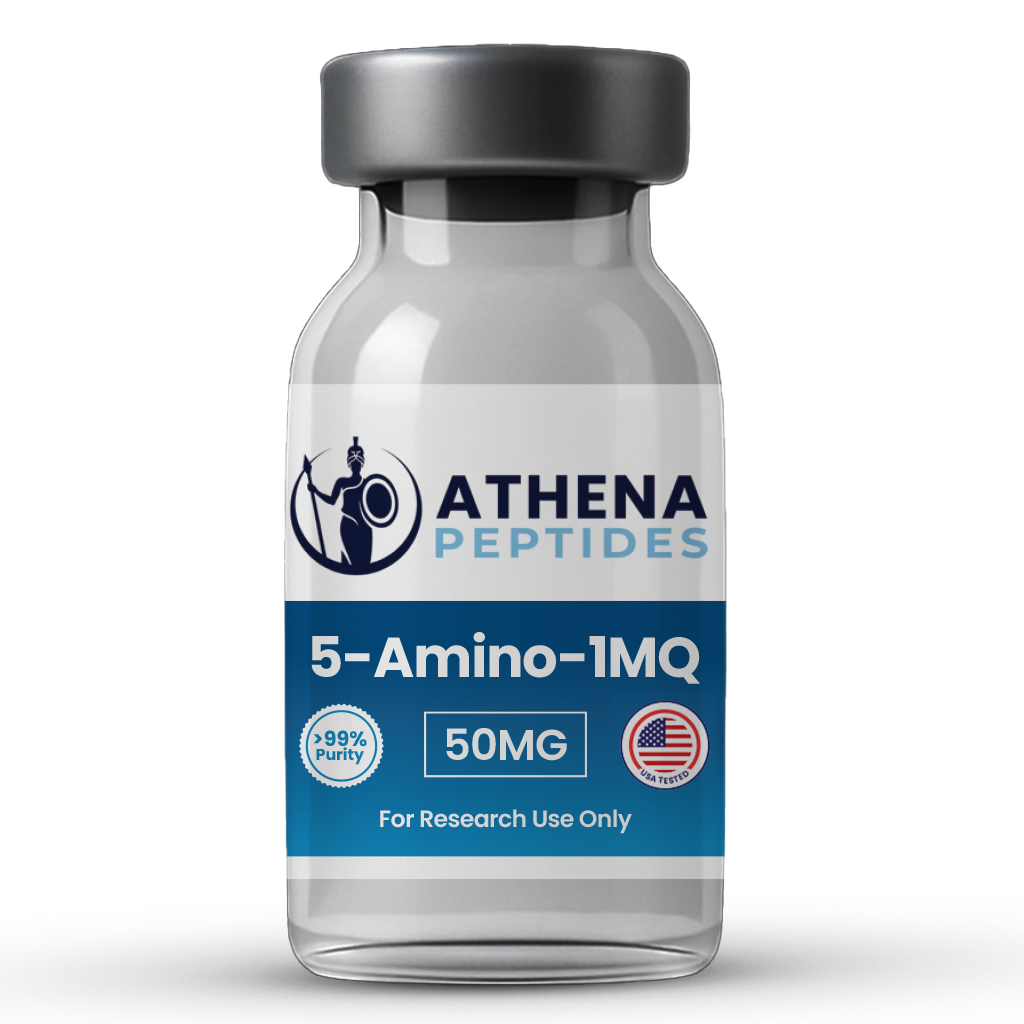
5-Amino-1MQ 50MG
$75.00MG
5-Amino-1MQ is a synthetic research compound studied for its ability to block the enzyme nicotinamide N-methyltransferase. By influencing NAD+ activity, it provides scientists with a dependable tool for exploring energy balance, cellular pathways, and molecular regulation in controlled laboratory settings.
In stock
Overview
5-Amino-1MQ is a synthetic compound that laboratories use to study enzyme-related metabolic pathways. Researchers focus on this compound because it interacts with nicotinamide N-methyltransferase, commonly called NNMT. This enzyme helps regulate NAD+ availability, which directly affects energy production and cellular balance. Because of this connection, scientists use the compound to better understand how enzyme activity influences metabolism.
In controlled research settings, scientists actively track how enzyme inhibition changes metabolic behavior. As a result, laboratories can study cellular responses without adding outside variables that could affect accuracy.
NNMT Inhibition and NAD+ Regulation
NNMT influences part of the NAD+ salvage process. When researchers limit NNMT activity, they can clearly observe how NAD+ levels change inside cells. NAD+ supports many basic cell functions, including energy use, metabolic signaling, and molecular stability.
Because of this role, researchers use these studies to understand how cells respond to shifts in enzyme activity. In addition, this work supports broader research into metabolic pathways and cellular regulation. Since the compound behaves consistently in laboratory conditions, it allows researchers to gather reliable data across repeated experiments.
Laboratory Preparation and Storage
5-Amino-1MQ arrives as a stable, dry powder designed for laboratory use. Before testing, researchers dissolve the powder into a liquid using standard lab methods. Proper handling helps preserve quality and consistency throughout the study.
For example, laboratories store the dry material in a cool, dry area away from light. After mixing, refrigeration helps maintain stability. For long-term storage, researchers freeze the solution at minus 20 degrees Celsius to support extended use.
Frequently Asked Questions
What is 5-Amino-1MQ and how does it work?
5-Amino-1MQ is a synthetic small-molecule compound studied for its ability to inhibit the enzyme nicotinamide N-methyltransferase, commonly referred to as NNMT. This enzyme plays a regulatory role in metabolic signaling and energy balance within cells. By limiting NNMT activity, 5-Amino-1MQ helps preserve nicotinamide, a key precursor involved in NAD+ production, allowing researchers to examine how cellular energy utilization and metabolic efficiency may be influenced.
What is 5-Amino-1MQ used for in research settings?
In professional research environments, 5-Amino-1MQ is examined for its role in metabolic regulation and cellular energy pathways. Scientists study this compound to better understand how enzyme inhibition can impact fat metabolism, glucose utilization, and overall metabolic signaling. Its targeted mechanism makes it useful for exploring metabolic adaptation and energy balance models.
How does 5-Amino-1MQ affect NAD+ levels?
NNMT consumes nicotinamide during methylation processes, which can reduce availability for NAD+ synthesis. By inhibiting NNMT, 5-Amino-1MQ allows more nicotinamide to remain accessible for NAD+ production. NAD+ is a critical coenzyme involved in mitochondrial activity, redox reactions, and cellular communication, making this pathway an area of significant scientific interest.
Is 5-Amino-1MQ associated with fat metabolism research?
Yes, 5-Amino-1MQ is frequently studied in the context of fat metabolism and body composition research. By influencing metabolic enzymes rather than appetite or stimulatory pathways, it provides researchers with a tool to examine how cells regulate fat storage and energy expenditure. This has made it a topic of interest in studies focused on metabolic efficiency and adipose signaling.
How is 5-Amino-1MQ different from traditional metabolic compounds?
Unlike many conventional metabolic compounds that rely on hormonal stimulation or nervous system activation, 5-Amino-1MQ operates at the enzymatic level. Its mechanism centers on NNMT inhibition, offering a more targeted approach to studying metabolic regulation. This distinction allows researchers to explore metabolic changes without introducing stimulant-based variables.
Why is 5-Amino-1MQ gaining attention in metabolic research?
5-Amino-1MQ is gaining attention because it addresses metabolism at a foundational biochemical level. As interest in NAD+, mitochondrial health, and metabolic flexibility continues to grow, compounds that influence these pathways through enzyme regulation are becoming increasingly relevant. Its specificity and consistency make it a valuable compound for advanced metabolic research models.
SURPASS & SURMOUNT Clinical Programs
SURPASS-1: Monotherapy Efficacy
478 treatment-naïve T2D patients randomized to GLP2-T (5/10/15 mg) vs placebo for 40 weeks:
- HbA1c reductions: -1.87% (5 mg), -1.89% (10 mg), -2.07% (15 mg) vs +0.04% placebo
- 87-97% of participants achieved HbA1c <7% (vs 20% placebo)
- Weight loss: -7.0 to -9.5 kg dose-dependent reduction
- Superior glycemic control without background medications
SURPASS-2: Head-to-Head vs Semaglutide
1,879 T2D patients on metformin randomized to GLP2-T vs GLP1-S 1 mg for 40 weeks:
- GLP2-T 15 mg reduced HbA1c -2.46% vs -1.86% with GLP1-S (p<0.001)
- Weight loss: -11.2 kg (15 mg) vs -5.7 kg GLP1-S
- 62% achieved dual endpoint (HbA1c <5.7% + ≥5% weight loss) vs 18% GLP1-S
- Established dual-agonist superiority over selective GLP-1RAs
SURMOUNT-1: Obesity Pharmacotherapy
2,539 adults with obesity (BMI ≥30) or overweight (BMI ≥27) with comorbidities, 72 weeks:
- Mean weight reduction: -15.0% (5 mg), -19.5% (10 mg), -20.9% (15 mg) vs -3.1% placebo
- 89% of participants on 10 mg achieved ≥5% weight loss (vs 28% placebo)
- 50% achieved ≥20% weight loss on 10/15 mg doses—unprecedented in pharmacotherapy
- Significant improvements in cardiometabolic markers (BP, lipids, inflammatory markers)
SURMOUNT-2: Obesity + Diabetes
938 adults with obesity/overweight and type 2 diabetes on metformin ± SGLT2i/sulfonylurea:
- Weight loss: -12.8% (10 mg), -14.7% (15 mg) vs -3.2% placebo at 72 weeks
- HbA1c reduction: -2.07% (10 mg), -2.11% (15 mg) vs -0.51% placebo
- Dual benefit in challenging population with metabolic comorbidity
- Sustained effects maintained through study completion
Cardiovascular Risk Reduction
Post-hoc analysis and meta-analysis of cardiovascular outcomes across trials:
- Systolic BP reduction: -5 to -8 mmHg across doses
- LDL cholesterol: -7 to -10 mg/dL improvement
- High-sensitivity CRP: -43% reduction (inflammatory marker)
- SURPASS-CVOT outcomes trial ongoing (results expected 2024-2025)
Renal & Hepatic Effects
Secondary and exploratory endpoints from pooled SURPASS/SURMOUNT data:
- Urinary albumin-to-creatinine ratio reduction: -27% vs baseline
- eGFR preservation in participants with baseline CKD
- ALT/AST reductions suggest hepatoprotective effects in NAFLD
- Mechanistic studies ongoing to elucidate organ-protective pathways
Structural & Pharmacological Insights
Receptor Binding Modes
Cryo-electron microscopy structures reveal GLP2-T engages both GIPR and GLP-1R through their orthosteric binding pockets in the N-terminal extracellular domain. The C20 fatty acid modification does not directly contact the receptor but positions the peptide for enhanced G protein coupling efficiency.
Transmembrane Domain Conformations
Active-state receptor structures demonstrate GLP2-T stabilizes outward movement of transmembrane helix 6, creating Gs binding interface geometry. The bias toward cAMP signaling at GLP-1R correlates with reduced conformational changes in intracellular loop 3, limiting β-arrestin recruitment.
Islet Synergy Mechanisms
Co-infusion studies demonstrate GIP + GLP-1 produce supraadditive insulin secretion (>2x individual effects). GLP2-T recapitulates this synergy in single-molecule format. Mechanistically, parallel cAMP generation from both receptors amplifies PKA-dependent phosphorylation of KATP channels and voltage-gated calcium channels, maximizing glucose-stimulated insulin secretion.
GIPR Requirement for Efficacy
Genetic ablation studies in human islets confirm GLP2-T’s insulinotropic actions require functional GIPR. In GIPR knockout models, GLP2-T loses ~60% of glucose-lowering capacity, demonstrating GIP signaling is non-redundant despite GLP-1R activation.
Adverse Event Profile
Gastrointestinal (Most Common)
Nausea (12-18%), diarrhea (12-14%), vomiting (2-6%), constipation (5-7%). Predominantly mild-to-moderate severity, highest incidence during dose escalation, typically resolving within 4-8 weeks. Discontinuation rate: 4-7% vs 2% placebo.
Injection Site Reactions
Mild erythema, pruritus, or induration reported in 1-3% of participants. Rotating injection sites (abdomen, thigh, upper arm) minimizes local reactions. No serious injection-related adverse events.
Hypoglycemia Risk
Glucose-dependent mechanism results in low intrinsic hypoglycemia risk when used as monotherapy (<1%). Risk increases to 5-8% when combined with sulfonylureas or insulin. No severe hypoglycemia events in monotherapy trials.
Thyroid C-Cell Concerns
GLP-1RAs carry theoretical medullary thyroid carcinoma risk based on rodent models. Human relevance uncertain—no increased calcitonin elevations or thyroid neoplasia in clinical trials. Contraindicated in MEN2 or personal/family history of MTC.
Cardiovascular Effects
Heart rate increases: +2 to +4 bpm mean change. Mechanism likely involves increased sympathetic tone from weight loss. No increased atrial fibrillation risk observed. Blood pressure reductions (-5 to -8 mmHg systolic) likely cardiovascular-protective.
Rare Serious Events
Acute pancreatitis: <0.2% incidence (similar to placebo rates). Gallbladder disease: 1.5% vs 0.7% placebo, likely secondary to rapid weight loss. Diabetic retinopathy worsening: rare, associated with rapid glycemic improvement in patients with pre-existing retinopathy.
References
- Samms RJ, et al. “The incretin co-agonist GLP2-T requires GIPR for hormone secretion from human islets.” Nature Metabolism. 2023;5:1064-1078.
- Zhao F, et al. “Structural insights into multiplexed pharmacological actions of GLP2-T and peptide 20 at the GIP, GLP-1 or glucagon receptors.” Nature Communications. 2022;13:1057.
- Willard FS, et al. “Structural determinants of dual incretin receptor agonism by GLP2-T.” PNAS. 2022;119(12):e2116506119.
- Rosenstock J, et al. “Efficacy and safety of a novel dual GIP and GLP-1 receptor agonist GLP2-T in patients with type 2 diabetes (SURPASS-1): a double-blind, randomised, phase 3 trial.” Lancet. 2021;398:143-155.
- Frías JP, et al. “T irz versus Semaglutide Once Weekly in Patients with Type 2 Diabetes (SURPASS-2).” N Engl J Med. 2021;385:503-515.
- Jastreboff AM, et al. “Tirzepatide Once Weekly for the Treatment of Obesity (SURMOUNT-1).” N Engl J Med. 2022;387:205-216.
- Garvey WT, et al. “Tirzepatide once weekly for the treatment of obesity in people with type 2 diabetes (SURMOUNT-2): a double-blind, randomised, multicentre, placebo-controlled, phase 3 trial.” Lancet. 2023;402:613-626.
- Dahl D, et al. “The Role of Tirzepatide, Dual GIP and GLP-1 Receptor Agonist, in the Management of Type 2 Diabetes: The SURPASS Clinical Trials.” Diabetes Therapy. 2021;12:143-157.
- Sattar N, et al. “Cardiovascular and kidney outcomes with GLP2-T: A comprehensive meta-analysis.” Diabetes Obes Metab. 2024;26:560-571.
- Battelino T, et al. “Tirzepatide versus insulin degludec in patients with type 2 diabetes inadequately controlled on metformin (SURPASS-3 CGM): a multicentre, randomised, open-label, parallel-group, phase 3 trial.” Lancet Diabetes Endocrinol. 2023;11:427-438.
- Willard FS, et al. “Tirzepatide is an imbalanced and biased dual GIP and GLP-1 receptor agonist.” JCI Insight. 2020;5(17):e140532.